
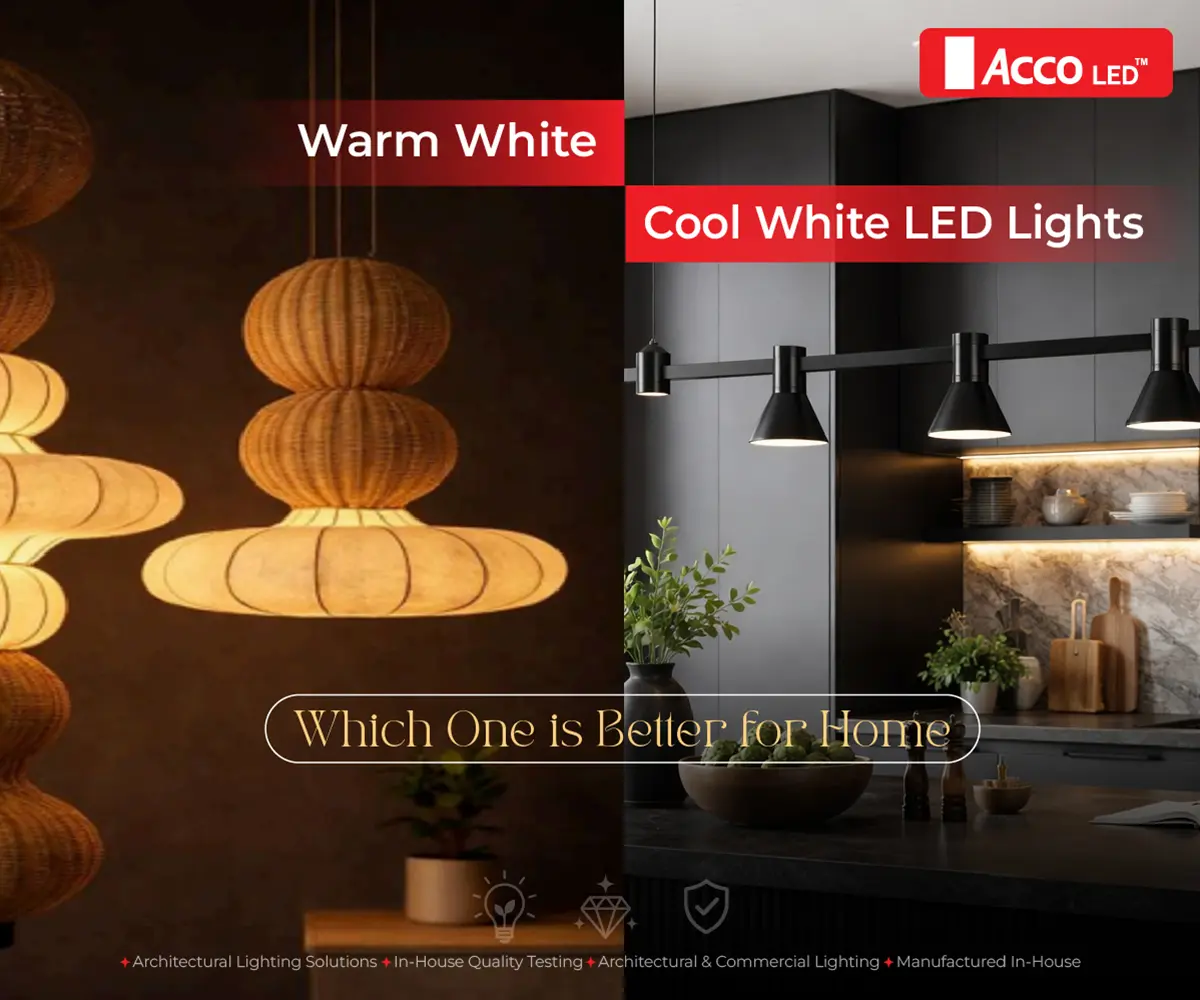
Have you ever bought a beautiful ceiling light, installed it, and realised the room looks completely different? Sometimes, the problem isn’t the fixture. It’s the colour of the light.
Some lights give off a soft yellow glow, while others produce a bright white appearance. Both have their place at home. Consider what you do in each room, how much natural light is available, and what kind of ambiance you want when choosing between warm white and cool white LED lights.
Warm White vs Cool White LED Lights: Which One Is Better for Home and Why Does Colour Temperature Matter?
The biggest difference between cool white and warm white is colour temperature. Manufacturers measure it in Kelvin (K).
- Warm White (2700K–3000K): Produces a soft, yellowish light.
- Natural White (3500K–4000K): Gives a more neutral white appearance.
- Cool White (5000K–6500K): Creates a crisp white light, sometimes with a bluish tint.
A higher Kelvin number doesn’t mean a brighter bulb. Brightness depends on lumens.
For example, two LED bulbs can produce 800 lumens but have completely different colour temperatures.
Why Choose Warm White Light for Your Home?
Think about the lighting in a comfortable hotel bedroom. It usually looks soft rather than extremely bright.
The warm white light gives a similar feel to bedrooms and living rooms. It works particularly well with beige walls, wooden furniture, curtains, and other warm colours.
You can use Acco Led Fabric Lights or Acco Led Modern Lights when planning decorative lighting, provided the chosen fixtures offer the required colour temperature.
Warm white works well in:
- Bedrooms and bedside corners
- Living rooms and family seating areas
- Dining spaces
- Decorative wall lighting
Warm light bulbs also work well for evening use, especially when you can dim them.
Where Does Cool White Light Work Better?
Imagine chopping vegetables under a dim yellow bulb. You might struggle to see small details clearly.
The cool white light helps you see your work clearly. However, brightness and fixture placement matter just as much as colour.
Kitchens, laundry areas, and work counters often benefit from neutral or cool white lighting.
Acco Led Functional Lights and Acco LED Magnetic Lights are fixture categories you can explore for task lighting, depending on their specifications.
Avoid using harsh, exposed cool white bulbs close to eye level, as glare can make them uncomfortable.
Best LED Light Colours for Different Rooms
You don’t need one colour temperature throughout your house. Each room serves a different purpose.
| Room | Recommended colour |
|---|---|
| Bedroom | Warm white, 2700K–3000K |
| Living room | Warm white, 2700K–3000K |
| Kitchen | Neutral or cool white, 4000K–5000K |
| Study room | Natural white, 3500K–4000K |
| Bathroom | Neutral white, around 4000K |
| Dining room | Warm white, around 3000K |
For example, an Acco LED Dome Pendant Light could suit a dining table if you choose an appropriate bulb or light source.
Is Warm White or Cool White Better for Your Eyes?
Neither option is automatically better for your eyes.
An extremely bright warm bulb can cause discomfort, just as a poorly positioned cool white bulb can.
Check the brightness, glare, flicker and placement before you buy. For reading, use enough light to see comfortably without shining it directly into your eyes.
In the evening, warmer and dimmer lighting can feel more soothing. Bright, cool-toned lighting shortly before bedtime can also affect sleep.
Can You Mix Warm and Cool White Lighting?
Yes. You can use warm white ceiling lights in your living room and a neutral white lamp beside your reading chair.
In a kitchen, neutral overhead lights can work with warmer pendant lights above the dining counter.
Keep nearby lights reasonably consistent when they illuminate the same area. This prevents awkward colour differences across walls and furniture.
Frequently Asked Questions
1. Which rooms are best for warm and cool white bulbs?
Warm white suits bedrooms and living rooms. Cool or neutral white works well in kitchens and work areas.
2. What does colour temperature mean?
Colour temperature describes the light’s appearance in Kelvin. Lower numbers look yellowish; higher numbers look cooler.
3. Does LED light colour affect sleep?
It can. Bright, cool-toned lighting in the evening may disturb your normal sleep schedule.
4. Do warm and cool LEDs change furniture colours?
Yes. Light colour affects appearance, while the bulb’s colour rendering index (CRI) affects colour accuracy.
5. Can I use both light colours in one room?
Yes. Use warm light for general relaxation and neutral white for tasks. Keep the lighting comfortable and balanced.